SUNNY LiNK
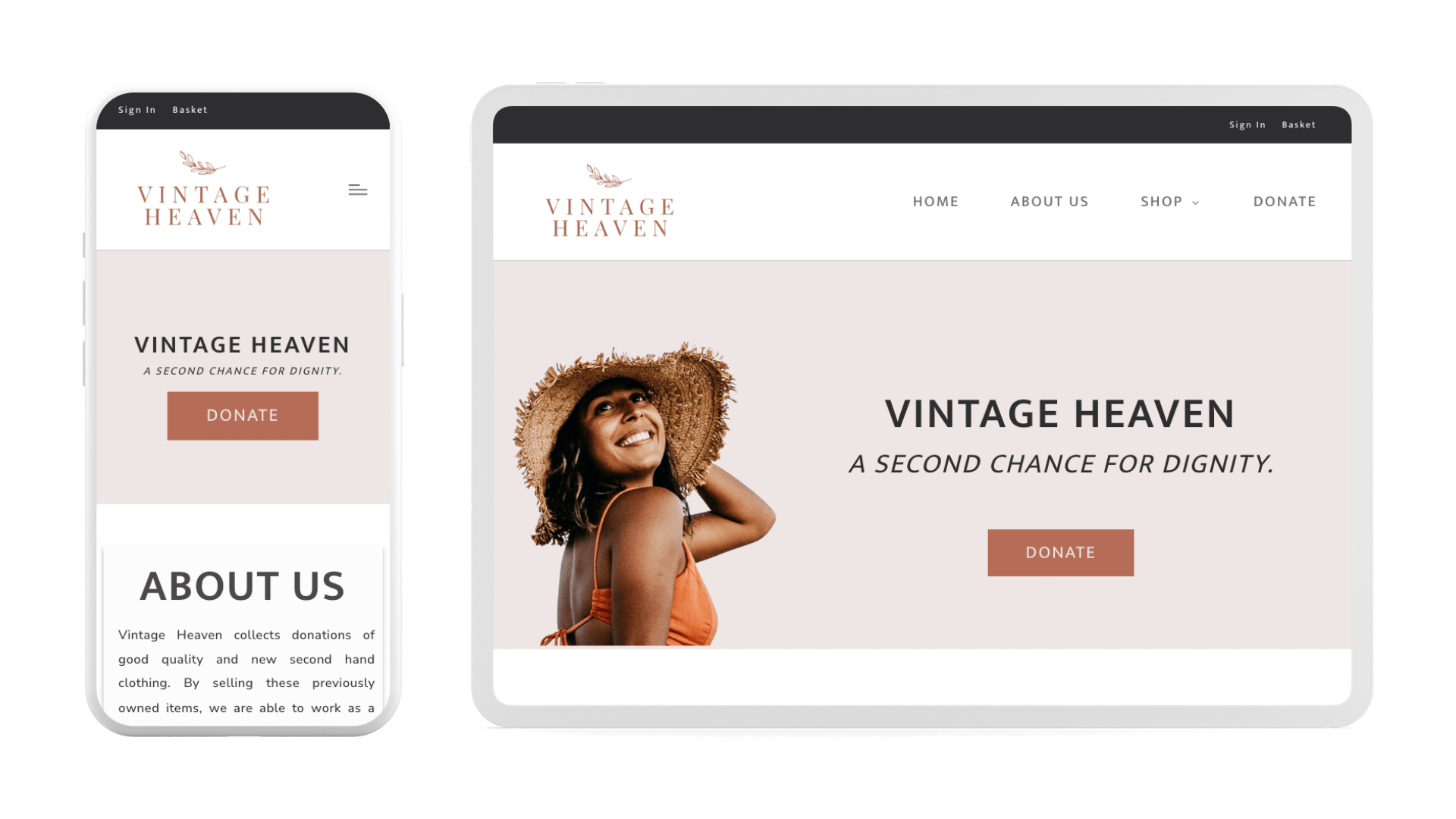
This small eCommerce website in South Africa is a great example for small businesses and saves a lot of money by using a free eCommerce website builder. In addition to being low-cost, this website uses what I think is the best eCommerce website builder for small business.
In this post I’m going to cover how I built this website, what it does, how it works, and what it costs. I’m also going to explain what Vintage Heaven is and why I was so pleased to be a part of this project.
I created a small eCommerce website for a South African charity that helps raise money by collecting and selling vintage clothes. In today’s modern digital age most people will go online every day to connect with their friends and community, do their shopping, and even find their romantic partner.

With so many people online it’s created new opportunities for organisations to connect with customers and communities. In this case, a small eCommerce website was the ideal solution for a charity that wants to expand its reach and connect with people who love vintage clothes.
This small eCommerce website significantly benefits the organisation by helping collect and sell used clothes and providing a broader platform for reaching potential buyers. By moving from a local, physical presence to an online marketplace, the organisation can expand its customer base beyond geographical limitations, allowing individuals from different regions to view and purchase their offerings. This not only increases sales opportunities but also enhances the visibility of the organisation, potentially attracting more donations and support.
Furthermore, an eCommerce website offers the convenience of shopping from home, appealing to a wider audience who prefer online shopping to visiting a physical store. This digital presence can also facilitate easier inventory management and reduce overhead costs associated with maintaining a physical storefront.
Overall, an eCommerce website serves as a cost-effective tool for maximising reach, efficiency, and profitability for an organisation dedicated to collecting and selling used clothes.
This website; vintageheaven.co.za is an ideal small business eCommerce website because it doesn’t require a lot of time or money to create. It’s one of the most cost-effective ways if not the cheapest way to create an eCommerce website in South Africa today.
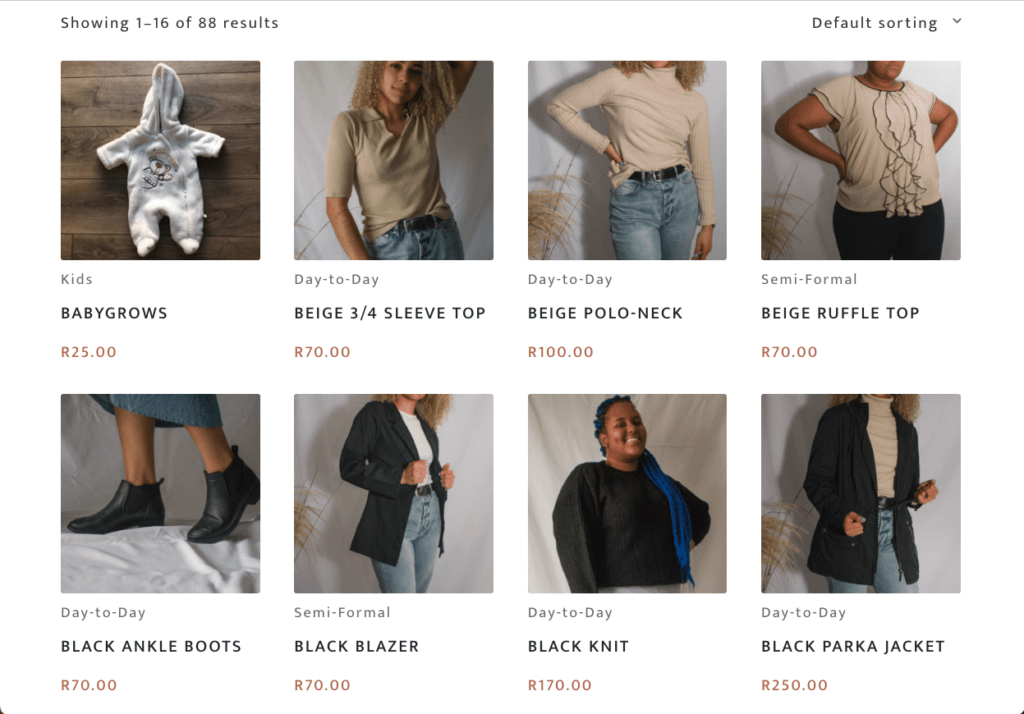
One person can do it by themselves. If you don’t know how there’s plenty of information and resources to help you (like this one). You could also hire a freelance web developer and it wouldn’t be expensive to build a small eCommerce website like this.
Building it on this platform also allows for a great degree of design customisation giving you the freedom to tailor the website to exactly to your brand. Having a design that perfectly reflects your businesses unique brand identity helps your business and stand out and creates an impression of professional quality. Just like I’ve done in this example.
It’s a great example of what would work for a small business owner of a retail clothing store that wants to reach more customers and increase your sales by launching an eCommerce website.
Vintage Heaven collects donations of good quality and new second hand clothing. By selling these previously owned items, they are able to work as a fundraiser for Isidima, a project run by the non-profit organisation, SALT Projects. Isidima aims to improve the quality of life and restore dignity for the most vulnerable women in our community and surrounding areas. This is made possible through life coaching, medical assistance, food parcels, and nutritious meals.
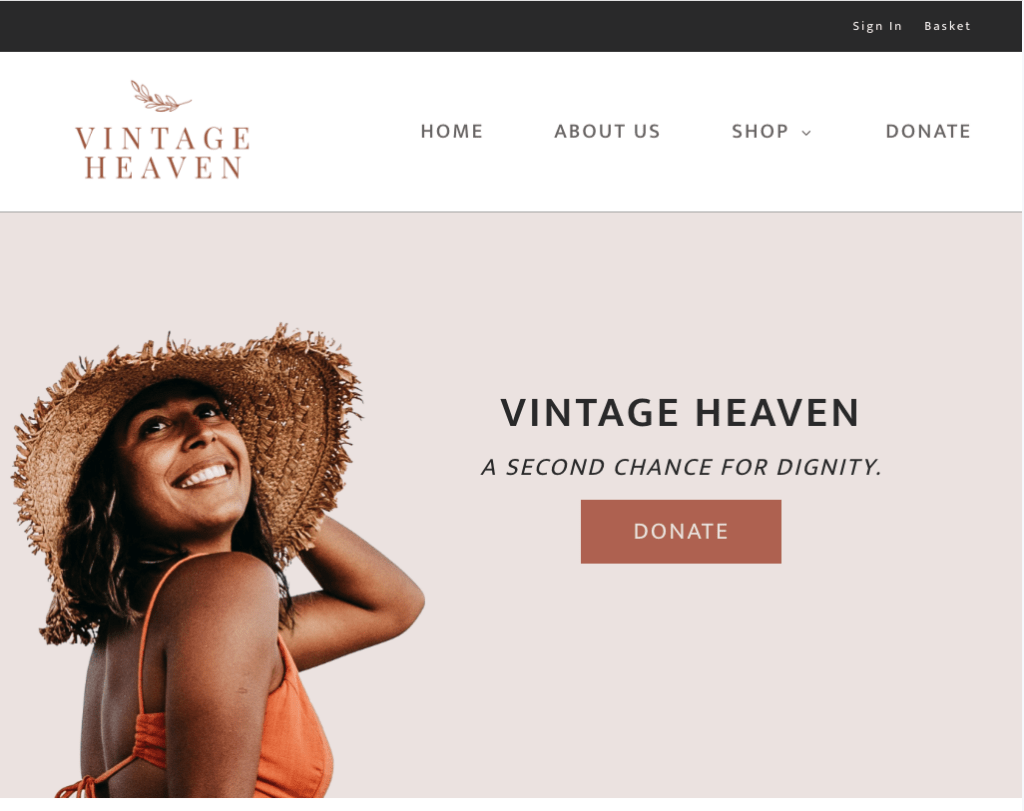
The website is an online platform that connects charitable people who want to help by donating with socially conscious fashionistas. The website accepts donations to help raise money for women’s and children’s shelters by collecting and selling vintage clothes that have been donated. People can donate their unwanted clothes through the website, where they are put up for sale.
Volunteers sort through donations to find stylish vintage garments that are in great condition and curate a fashionable collection worthy of the catwalk. Items that don’t make it onto the website to be sold to raise funds are given to those who need them.
Especially near the end of May come later sunrises and earlier sunsets. With this, a chill that brings about shivers and shakes that have us reaching for jerseys and blankets. And we know- winter is coming.
For those who are least fortunate, this time of year normally presents the additional challenge of just trying to keep warm. So many mothers try to keep their children fed and warm so they can try to keep healthy. The year we launched the website was even more challenging as 2020 had us all facing extraordinary circumstances.
With this small eCommerce website the Vintage Heaven initiative was able to continue operating during such unprecedented times and ensure that those in need were not left to endure even greater suffering.

The Vintage Heaven eCommerce website initiative works like this:
To donate used clothing to Vintage Heaven, people simply visit the website and fill out a donation form. The form helps identify and sort the clothes into women’s or children’s categories, collections and organise them by size.
All the donated clothes are sorted through by volunteers to find stylish vintage clothing items that are gently used to be added to the Vintage Heaven inventory. The clothes are then curated into collections of day-to-day and semi-formal. More collections will be added as inventory grows and expands.
The selected vintage clothes are put up for sale on the website. An eCommerce website makes it possible to reach thousands of customers online and makes it easy to facilitate the sale of items. This is a huge benefit as the charity can collect more clothes, sell more clothes, and raise more money. By photographing the clothing items and displaying them on a widely and easily accessible platform people can shop easily.
The funds raised through the sale of clothes on the website are used in the Isidima program that assists vulnerable women and children. The program uses the funds to provide shelter, food, and health care.
I created this small eCommerce website using WordPress and WooCommerce along with a few other plugins. I was contacted about the project at the end of 2019 and I had been working with WordPress since 2017. In 2018, I studied website development and learned to build websites using coding languages HTML5, CSS3, Jquery, PHP, and Javascript.
With this knowledge I was able to determine the best solution for this use case. A small eCommerce website for a charity. The website had to look fashionable since it would be selling vintage clothes. It required custom web design that was created to reflect the unique brand. It had to be easy for anyone to manage it and do things like, add inventory, images, process orders and track sales. Most importantly it had to cost as little as possible. They also needed the website as soon as possible.
Taking the brief into account, it was clear that the best solution would be WordPress. Custom coding a website like this would take 3 to 6 months and I couldn’t afford to give up that much time. Using shopify would cost more, especially if we were going to implement a custom design. Other options for website builders such as WiX and Weebly cost less than Shopify but weren’t as user-friendly and also cost more than WordPress.
Joomla was the second best option as it’s also free but I don’t think the dashboard isn’t as user-friendly as WordPress. It’s also not as popular so there isn’t as much support for the platform or its plugin extensions.
Another option I briefly considered was a Facebook shop as it would be the quickest, easiest, and cheapest way. However, they wanted a website and not a Facebook page. Which I think is better because then you own and control the platform. Turns out it was ultimately the right choice since Facebook deprecated their shop feature a couple years later.
Ultimately, I decided that WordPress was the best option in this case and it turned out to be the right decision.
A professional graphic designer named Amanda that works as a volunteer at Salt Projects brought up the idea for the Vintage Heaven concept and offered her time and skills to design the website.
Amanda created a beautiful, simple, and elegant design for the online store based on the brand. She created the Vintage Heaven brand and designed a logo and website that’s the perfect visual representation of what a vintage clothing brand is.
The website design was created in Adobe XD. A professional tool that’s used by UX/UI and graphic designers to create renderings of digital platforms like websites and apps. The website’s design included three pages; the home, shop and product pages. These page designs come together with a layout, colours, and visual elements like images, icons, and fonts carefully crafted and assembled into a cohesive visual.
Amanda was looking for a web developer to move the design from the canvas to the internet and reached out to me. She provided me with the design document and all the visual elements for the website such as images and icons.
The website was developed with WordPress and a few necessary plugins that are available for free. WordPress is a pre-built website platform with an advanced content management system whose capabilities can be further enhanced and customised by installing plugins.
I used Elementor to create the front-end and implement the custom web design. The back-end uses Woo-commerce that allows items to easily be uploaded to the site and inventory management. To facilitate online payments I used the PayFast payment gateway. To create donation or contact forms the website uses the WP Forms Lite plugin. To optimise the website for a better user experience by improving load time I used Hummingbird and Smush.
This is the initial and most crucial step in establishing an online presence. This first step in launching a website to the internet so that its live and publicly accessible is registering a domain for the website and setting up a server to host the website. Domain registration and hosting for this website are provided by my company, Sunny Link Digital Marketing.
Choosing and registering a domain name is a critical step in creating an identity for the eCommerce website. The domain name should be memorable, relevant to the organisation’s mission, and ideally include keywords related to used clothing to improve search engine visibility. The registration process involves searching for an available domain name, selecting a domain registrar and paying an annual fee to secure the domain.
Selecting a hosting service is essential for storing the website’s files and making the site accessible on the internet.
For an eCommerce site dealing with used clothes, choosing a hosting plan that offers at least 5GB of SSD (Solid State Drive) storage is recommended to ensure fast loading times and ample space for product images and information. SSD storage is known for its speed and reliability compared to traditional HDD (Hard Disk Drive) storage.
Additionally, having access to 5 databases allows for efficient management of customer data, orders, and product catalogues. Unlimited traffic is another crucial feature, as it ensures the website can handle a large number of visitors without incurring extra charges or experiencing downtime.
When selecting a hosting provider, it’s important to consider their uptime guarantee, customer support quality, and scalability options to accommodate future growth.
Building a WordPress eCommerce website, involves leveraging the power of WordPress combined with various plugins and themes to craft a customised online storefront that caters to the organisations unique selling needs.
It involves several sub-steps, starting from planning the website’s structure, design, and functionality tailored to the organisation’s needs.
The process includes selecting a suitable eCommerce platform (such as Shopify or WooCommerce) that can support the specific requirements of selling used clothes online, like size variations, product conditions, and shipping considerations.
This phase also involves deciding on the payment gateways to facilitate transactions, ensuring security measures are in place to protect customer data, and planning for mobile responsiveness to cater to shoppers using smartphones and tablets.
WordPress is a free, powerful and flexible content management system (CMS) that serves as the foundation for countless websites worldwide, including eCommerce platforms. It is an excellent choice for an organisation selling used clothes online due to its ease of use, extensive community support, and scalability.

WordPress allows users to add and manage their website content easily without needing extensive coding knowledge, thanks to its intuitive dashboard.
Furthermore, WordPress supports numerous plugins and themes, enabling the customisation and enhancement of the website’s functionality and design to meet the specific needs of selling used clothing.
Installing WordPress, adding plugins, and creating a new page are fundamental steps in setting up an eCommerce website for selling used clothes.
The process begins with WordPress installation, which can often be done via a one-click installation feature offered by many web hosting providers. This feature simplifies the setup process, automatically configuring WordPress on the server.
Once WordPress is installed, the next step involves installing plugins to extend the website’s functionality. This can be achieved by navigating to the “Plugins” section within the WordPress dashboard, clicking “Add New,” and then searching for the desired plugins such as Elementor, Woo Commerce, and WP Forms Lite. After finding the plugins, click “Install Now” followed by “Activate” to make them functional on the site.
The final step is creating a new page, which is essential for showcasing the used clothes. This can be done by going to the “Pages” section and clicking “Add New.” Here, you can use Elementor to design the page layout visually, dragging and dropping elements to create a professional-looking page without writing any code.
Whether it’s a product gallery, contact form, or an about us section, these tools collectively make it straightforward to launch a comprehensive and engaging online presence for selling used clothing.
Elementor is a drag-and-drop page builder plugin for WordPress that makes it easy to design your website visually without any coding knowledge. With Elementor, I can create custom layouts and designs for the website that are attractive, responsive, and aligned with the Vintage Heaven brand identity.

Elementor offers a wide range of widgets and templates, facilitating the design of various page elements like headers, footers, product galleries, and more. This tool significantly simplifies the web design process, allowing for real-time previews and adjustments, ensuring that the website looks professional and functions smoothly on all devices.
WP Forms Lite is another free plugin for WordPress that enables the creation of simple, user-friendly forms without any coding. For an eCommerce website focused on used clothing, having accessible forms is crucial for engaging customers and facilitating interactions.
This plugin can be used to create contact forms, feedback forms, and registration forms, enhancing the user experience by providing a straightforward way for visitors to get in touch, sign up for newsletters, or register accounts.
The drag-and-drop interface makes it easy to customise form fields according to the organisation’s specific needs. In this case, I used it to create the custom online donation form (although the form is currently not live and a PDF document is being used instead).
While the Lite version offers essential features for form building, upgrading to the premium version unlocks more advanced functionalities such as payment integration, which can be useful for processing donations or selling clothes directly through the website.
WooCommerce offers both a free version and premium extensions, but focusing on the free version, it provides a robust foundation for building a small eCommerce website. This open-source plugin integrates seamlessly with WordPress, allowing users to set up an online store without incurring upfront costs.

The free version of WooCommerce includes essential features such as product listing, tax management, secure payments, and shipping options. Users can add unlimited products and product categories, making it ideal for a wide range of businesses, including those selling used clothes.
The plugin supports various payment gateways, such as PayPal and Stripe, directly out of the box, ensuring a smooth checkout process for customers. Despite being free, WooCommerce doesn’t compromise on functionality, offering inventory management and basic customer management tools.
For those looking to enhance their store further, WooCommerce’s extensive library of free and paid extensions and themes allows for customisation and scalability, catering to the unique needs of each business.
The PayFast payment gateway is available as a WordPress plugin and integrates with WooCommerce. Allowing merchants to accept payments through a secure and convenient payment gateway tailored to South African eCommerce sites, but also accessible to international businesses.

Connecting PayFast with WooCommerce enables the website to accept various payment methods such as card payments securely and conveniently. The process involves installing the PayFast plugin, configuring it with merchant details from PayFast, and then allowing customers to choose PayFast as their payment method at checkout. Payments are processed on PayFast’s secure platform, offering robust security features like SSL encryption.
After successful payment, both customers and merchants receive confirmation, facilitating order processing. Merchants can also manage transactions and issue refunds via PayFast’s dashboard, making it a comprehensive payment solution for eCommerce sites, particularly suited for South African businesses but also available to international merchants.
Integrating PayFast with WooCommerce simplifies the payment process for South African eCommerce businesses, providing them with a secure, reliable, and user-friendly payment gateway that supports multiple payment methods, ensuring a smooth checkout experience for customers.
In my quest to enhance the user experience and improve SEO for my website, I turned to two powerful tools: Hummingbird and Smush. By leveraging Hummingbird, I was able to significantly optimise the site’s performance, focusing on speeding up page load times through efficient caching, file compression, and performance monitoring.
Smush complemented these efforts by reducing the file sizes of images without sacrificing quality, ensuring that my site’s visuals were both striking and fast-loading. Together, these plugins played a pivotal role in streamlining my website’s operations, making it more accessible and enjoyable for visitors, while also boosting its rankings in search engine results.
Hummingbird is a performance optimisation plugin for WordPress websites that focuses on improving site speed and enhancing the user experience. It works by implementing several key strategies to reduce load times and ensure smooth site operation.

Hummingbird optimises WordPress websites through several key strategies to enhance site speed and user experience. It utilises caching to store copies of files for quicker access, employs GZIP file compression to reduce the size of HTML, CSS, and JavaScript files, and optimises assets by minifying and combining files to decrease load times.
Additionally, it offers performance scans with actionable recommendations for improvement and integrates with the Smush plugin for efficient image optimization. These combined efforts significantly boost website performance, benefiting both user satisfaction and SEO.
Hummingbird effectively reduces load times and improves the overall performance of WordPress websites. This not only enhances the user experience but also positively impacts SEO, as site speed is a significant factor in search engine rankings.
Smush is an image optimisation plugin for WordPress designed to improve website performance by reducing the file size of images without compromising their quality. It works through a process of compressing images automatically upon upload as well as offering the option to bulk smush existing images in your site’s media library.

Smush achieves this optimisation by removing unnecessary data from images, such as metadata from photographs, and employing advanced compression techniques that maintain the visual quality of the images. This results in faster page loading times, an enhanced user experience, and potentially better SEO rankings, as site speed is a factor considered by search engines.
Smush also supports lazy loading, which delays the loading of images until they are about to enter the viewport, further speeding up initial page load times and saving bandwidth for both the site owner and the visitor.
After thoroughly exploring various eCommerce website builders, I’ve concluded that WooCommerce stands out as the best option for small businesses.
WooCommerce offers an extensive array of features that cater to almost every need of an online store, including product management, inventory tracking, customer engagement, and detailed analytics. Its compatibility with numerous plugins and themes allows for the addition of functionalities such as subscription services, booking systems, and more, making it a highly versatile platform.
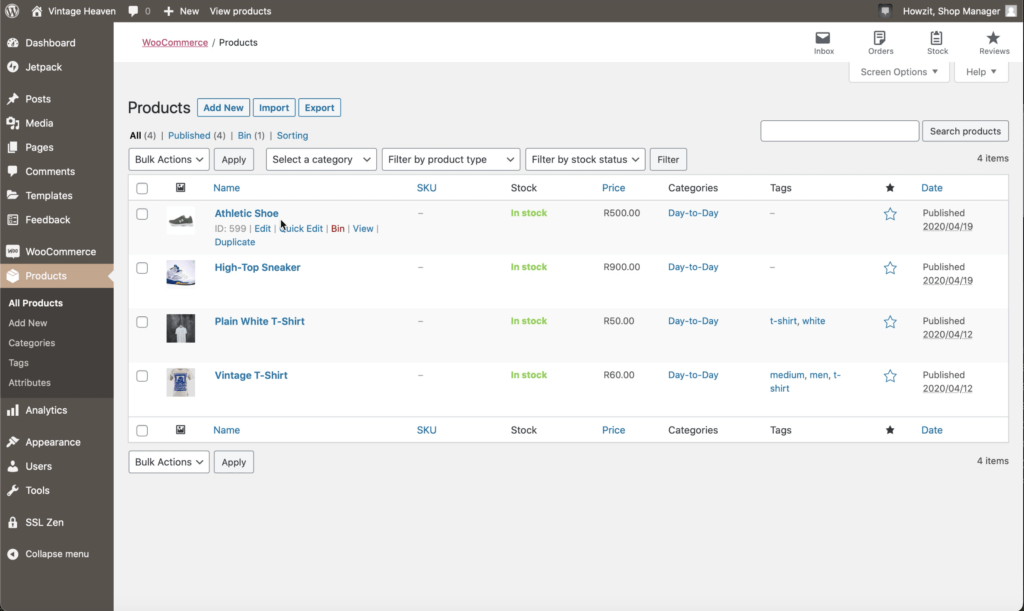
It starts with populating your store with products. Navigate to the “Products” section in your WordPress dashboard, where you can add new products, including details such as titles, descriptions, prices, and images. WooCommerce allows for the organisation of products into categories and tags, making it easier for customers to find what they’re looking for. Don’t forget to manage stock levels and update product information as needed.
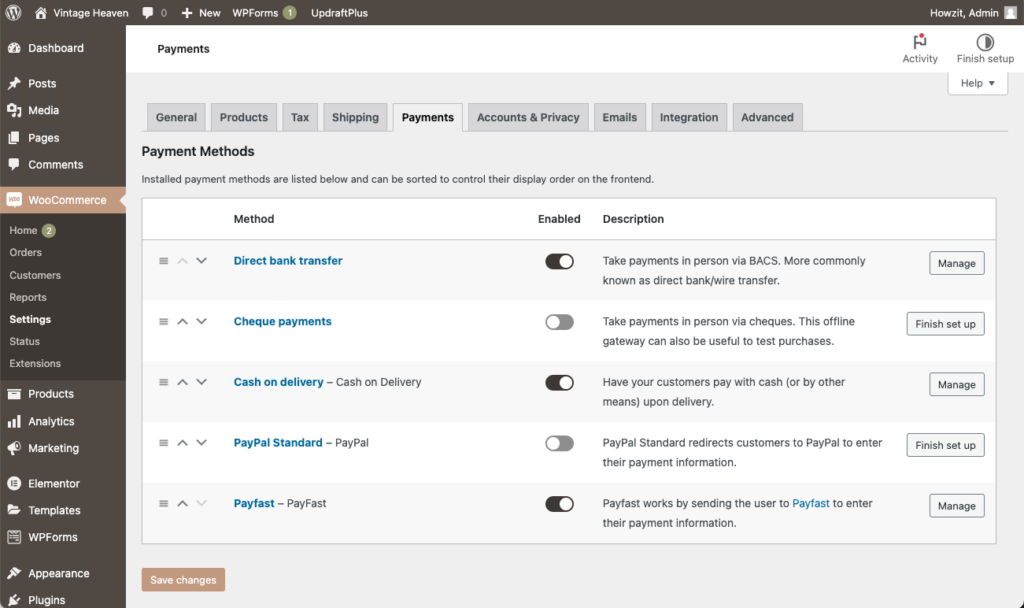
Configure your preferred payment methods under WooCommerce settings. WooCommerce supports various payment gateways like PayPal, Stripe, and bank transfers, enabling secure transactions. Ensure your payment gateway settings are correctly configured to smoothly process payments.
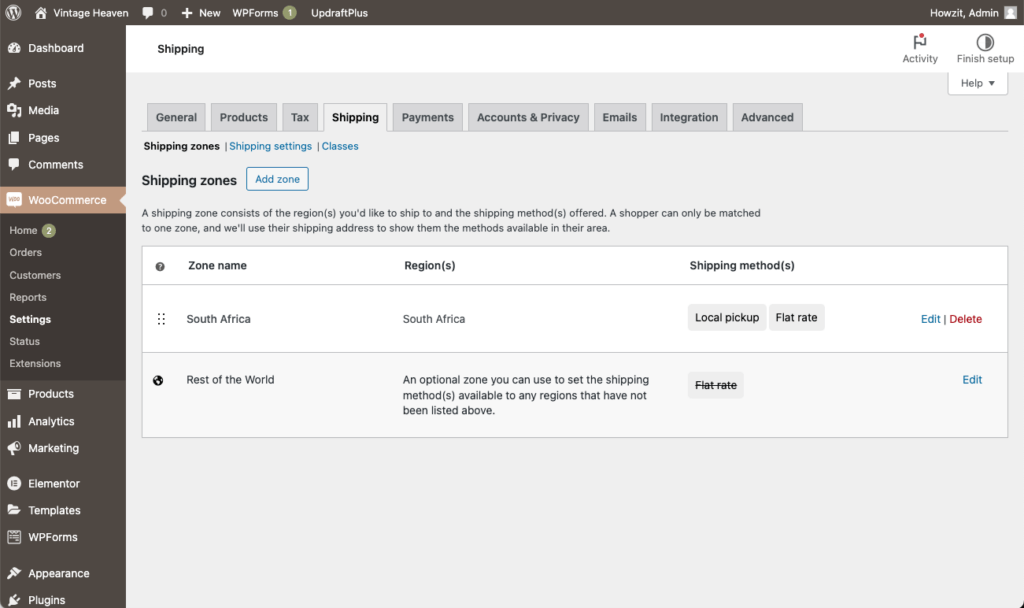
Set up shipping zones, methods, and rates based on your shipping strategy. WooCommerce allows you to customise shipping options, including free shipping, flat-rate shipping, and local pickup, catering to both domestic and international customers.
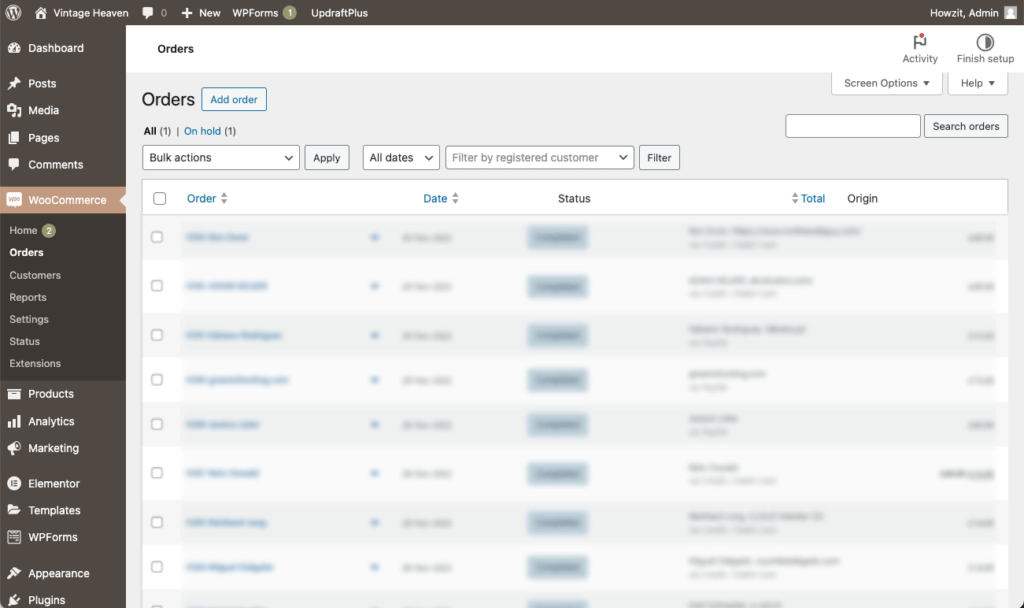
Monitor incoming orders through the “Orders” section. Here, you can view order details, manage order statuses (e.g., processing, completed, on-hold), and communicate with customers regarding their purchases. Prompt order management ensures customer satisfaction and efficient operation.
Keep track of your customers and their purchasing history through the “Customers” tab. This information can be invaluable for personalised marketing efforts, customer service, and understanding your target audience better.

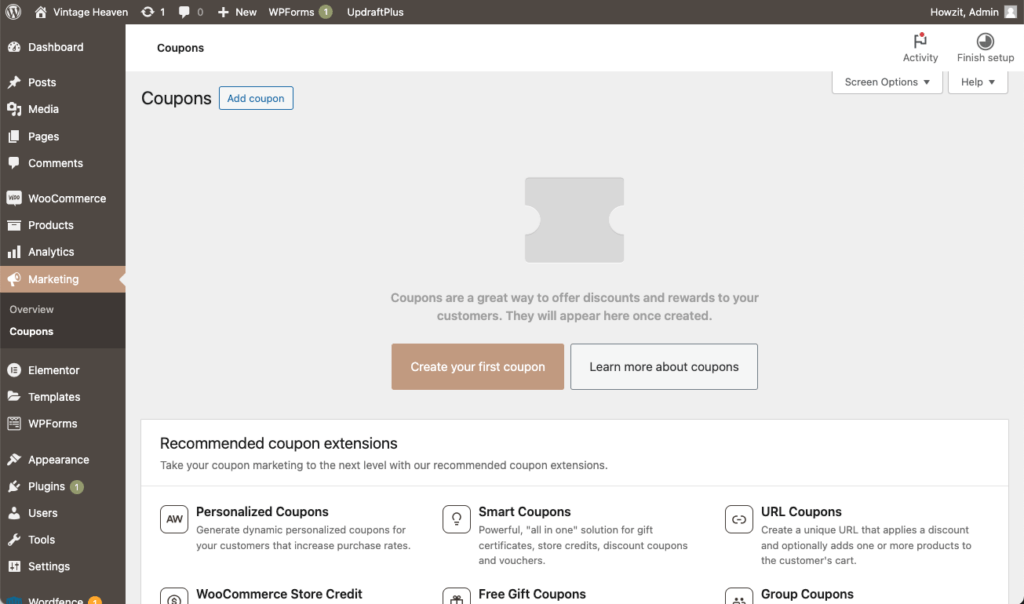
WooCommerce lets you create and manage coupons and discounts directly from your dashboard. This feature is an excellent way to incentivise purchases, reward loyal customers, and drive sales during promotional periods.
Use WooCommerce’s built-in analytics and reporting tools to track sales, refunds, popular products, and customer behaviours. These insights are crucial for informed decision-making and strategic planning for growth.

The primary advantage of WooCommerce is its deep integration with WordPress, providing an intuitive and seamless experience for those already familiar with the WordPress environment. This integration ensures that users have access to a broad community for support and an extensive range of themes and plugins to enhance their store. Moreover, its SEO capabilities are excellent, given WordPress’s strong SEO foundation, helping businesses rank better in search engine results.
WooCommerce is user-friendly, especially for those already acquainted with WordPress. Setting up a basic store is straightforward, but leveraging its full capabilities may require a learning curve, particularly regarding customisation and utilising advanced features.
Its popularity is a testament to its reliability and efficiency. Being one of the most widely used eCommerce platforms globally, it benefits from a vast community of developers and users, ensuring that assistance and resources are readily available.
WooCommerce’s open-source nature allows for extensive customisation and flexibility. Whether it’s adjusting the store’s design, adding custom functionalities, or integrating third-party services, WooCommerce provides the framework to build a store that precisely meets your business needs.
The free version of WooCommerce offers substantial value, enabling businesses to set up and run an eCommerce site with all the necessary functionalities without any cost. It also doesn’t take a percentage of sales as payment so it doesn’t cost anything to acquire or use.
Its fully capable, free plugin provides an easy-to-use, accessible entry point for small to medium-sized businesses wishing to venture into online sales, without the burden of high initial costs. It empowers entrepreneurs to create a comprehensive, professional online store that can scale with their business growth.
Despite its strengths, WooCommerce does have limitations. The necessity for additional plugins for extended functionalities can sometimes lead to a bloated site, potentially affecting performance. The free version has limited scalability so once a business has grown past a certain point they will most likely need to upgrade to the paid version.
The free version of WooCommerce doesn’t include advanced features such as real-time shipping rates, which require an integration with shipping carriers for live calculations. Additionally, it lacks dedicated support services; while the community forums provide assistance, direct access to professional or dedicated support is reserved for paid extensions or services.
Considering its robust features, flexibility, and the fact that its core version is free, WooCommerce represents an outstanding choice for small businesses looking to establish or expand their online presence. While there are some limitations and potential costs involved, the benefits far outweigh these, making WooCommerce my recommended eCommerce platform for small businesses aiming for growth and success in the digital marketplace.
In the creation of this particular website, the financial overhead included a domain registration fee of R600 per annum and hosting costs amounting to R1,800 yearly. While the website design and development services were generously provided free of charge, the market value for these services would typically be around R2,500 for design and R5,500 for development.
Additionally, the utilisation of WordPress and all associated plugins did not incur any costs. If one were to account for all potential expenses, including the pro bono services, the total investment in establishing the website would approximate R10,400.
Here’s the breakdown of costs in a table format, along with the total cost:
| Expense | Cost |
|---|---|
|
Annual Domain Registration |
R600 |
|
Annual Hosting |
R1,800 |
|
Website Design |
R2,500 |
|
Website Development |
R5,500 |
|
Wordpress, WooCommerce, & Other Plugins |
R0 |
|
Total |
R10.400 |
Excluding the costs for design and development, the total expenditure for the website, covering domain registration and hosting, amounted to R2,400.
This small eCommerce website is primarily created to facilitate the donation and sale of vintage clothes to help the charity but also helps by collecting financial contributions. It’s really simple and easy for users to shop or make donations.
Click on Donate in the menu or scroll down to the bottom of the home page. You can donate money to the charity using one of three ways shown in the “make a donation” section.
To donate clothes click on the donate clothing button and fill out the form and send your clothes to Vintage Heaven.

Socially conscious fashion has become a pivotal trend in the fashion industry, resonating deeply with consumers who prioritise environmental sustainability, ethical manufacturing practices, and social responsibility. The Vintage Heaven eCommerce website emerges as a beacon in this movement, offering an array of fashion options that cater to thrift shoppers and environmentalists alike.
By focusing on vintage and pre-loved clothing, Vintage Heaven not only provides a unique and eclectic mix of fashion pieces but also champions the cause of reducing waste and minimising the environmental impact of clothing production.
This approach aligns with the growing consumer trend towards more sustainable and ethically sourced fashion. Statistics reveal a significant shift in consumer behaviour, with an increasing number of shoppers, especially among younger generations, preferring to purchase from brands that demonstrate environmental stewardship and social responsibility. Vintage and second-hand clothing markets have seen a surge in popularity, attributed not only to the environmental benefits but also to the uniqueness and history behind vintage items.
Moreover, the rise of the “slow fashion” movement, which emphasises quality over quantity and encourages consumers to make more thoughtful choices about their clothing, further fuels the demand for vintage and pre-loved fashion. Platforms like Vintage Heaven are at the forefront of this trend, offering consumers a way to express their style uniquely and sustainably.
In embracing socially conscious fashion, Vintage Heaven not only taps into current consumer trends but also contributes to a larger cultural shift towards sustainability. By repurposing clothing, the platform reduces the demand for new garment production, which is often criticised for its heavy environmental footprint and labour issues. This initiative not only helps in conserving resources but also in reducing the amount of textile waste that ends up in landfills each year.
The Vintage Heaven eCommerce website stands as a testament to the evolving landscape of fashion, where the values of sustainability, ethical production, and social responsibility are becoming increasingly important. Through offering socially conscious fashion options, it not only meets the growing demand for sustainable clothing choices but also plays a crucial role in promoting environmental awareness and ethical consumerism within the fashion industry.

Socially and environmentally conscious clothes shopping has taken on new significance in today’s world, with initiatives like the one offering authentic vintage clothing not only meeting the growing demand for unique fashion choices but also serving a greater purpose.
Customers of this initiative have the satisfaction of knowing that their purchases contribute directly to helping women and children, channelling funds into vital support services and programs. Beyond the social impact, this approach to retail embraces environmental stewardship by collecting unwanted clothes and giving them a second life.
This not only reduces waste and pollution, which are significant concerns in the textile industry, but also challenges the fast fashion cycle that contributes to overconsumption and environmental degradation. Through such efforts, consumers are offered a meaningful way to shop, where their choices support both social causes and the health of the planet, embodying a holistic approach to fashion that values people and the environment equally.
To help those women and children in need by providing blankets and warm clothes, a non-profit organisation called SALT Projects drives an initiative called Vintage Heaven.
Vintage Heaven resells good quality items as a fundraiser for Isidima, the previously mentioned program that assists vulnerable women and children. Isidima is one of the many programs run by SALT projects. Donated items which are not sold on Vintage Heaven are given to families in need.
They collect clothing donations of all sorts from old and worn to barely worn to new and neglected and sort them for distribution or curate the clothes into desirable vintage collections to be sold.
Depending on the conditions of the donated clothes they are given to women and children who need them most or sold to raise funds to buy essentials such as food and hygiene products for those women and children.
They are putting in an even greater effort to collect as many donations as they can this year to ensure that the many women and children in shelters and orphanages are protected from the cold this coming winter and have a better chance at keeping healthy.
As part of this effort they reached out to me through a mutual friend, Amanda Mae, a graphic designer, to build an online clothing store for the Vintage Heaven initiative that would allow people to purchase clothes and make donations.

The initiative of reusing clothes plays a crucial role in helping the environment by significantly reducing the volume of waste accumulating in landfills and, most importantly, curtailing the dispersal of microfibres into the ocean and atmosphere. These microfibres, tiny strands shed from synthetic fabrics, pose a considerable environmental hazard as they permeate ecosystems, eventually making their way into animals and humans.
The presence of microfibres in the natural world has been linked to a variety of health problems, due to their ability to absorb and transport toxic chemicals. By encouraging the practice of reusing clothing, not only does this initiative promote a more sustainable and environmentally friendly approach to fashion, but it also addresses the pressing issue of microfibre pollution.
This proactive stance against waste and pollution underscores the importance of such environmental efforts, highlighting their potential to make a tangible difference in the health of our planet and the well-being of its inhabitants.
If you would like to help out with this initiative you can do so by visiting the Vintage Heaven eCommerce website and either donating those warm clothes you never wear or by purchasing some specially curated vintage items.
Browse a curated collection of stylish vintage clothes at vintageheaven.org.za

Reflecting on my involvement with this impactful initiative, I feel a deep sense of fulfilment and gratitude for the opportunity that arose, allowing me to volunteer my time and skills for a cause that aligns so closely with my values.
Working alongside Amanda has been a particularly rewarding experience; her dedication and drive were instrumental in bringing this project to life, and for that, I owe her a heartfelt thank you. Her guidance and collaboration made the journey not just productive but also immensely enjoyable.
Furthermore, I extend my appreciation to Salt Projects for their visionary role in creating this initiative. Their commitment to making a positive difference in the world is not only inspiring but also a powerful reminder of the good we can achieve when we come together. This experience has been enriching, offering me not just the chance to contribute to a worthy cause but also to grow personally and professionally through this collaboration.
In conclusion, our exploration into the realm of creating and operating a small eCommerce website, specifically one like Vintage Heaven that offers socially and environmentally conscious fashion, underscores the significant impact technology and mindful consumerism can have on society and the environment.
Through the strategic use of platforms like WordPress and WooCommerce, complemented by optimisation tools like Hummingbird and Smush, small businesses can efficiently establish a robust online presence. This not only aids in reaching a wider audience but also promotes sustainability by offering vintage and reused clothing, directly contributing to the reduction of waste and pollution.
Moreover, the initiative of diverting funds from sales towards supporting women and children highlights the profound social impact that businesses can achieve through conscious operational models. The emphasis on reducing the release of harmful microfibres into ecosystems further illustrates the vital environmental consideration embedded in the project.
This multifaceted approach not only caters to the growing consumer demand for sustainable fashion but also champions the cause of environmental stewardship and social responsibility.
In essence, this project exemplifies how integrating technological solutions with a commitment to socially and environmentally conscious principles can create a meaningful and impactful eCommerce venture. It serves as a model for future businesses, demonstrating that success can be harmoniously aligned with the greater good of society and the planet.
The lessons learned and the strategies discussed herein provide valuable insights for anyone looking to embark on a similar journey, emphasising the importance of sustainability, ethical practices, and community support in today’s digital and globalised marketplace.